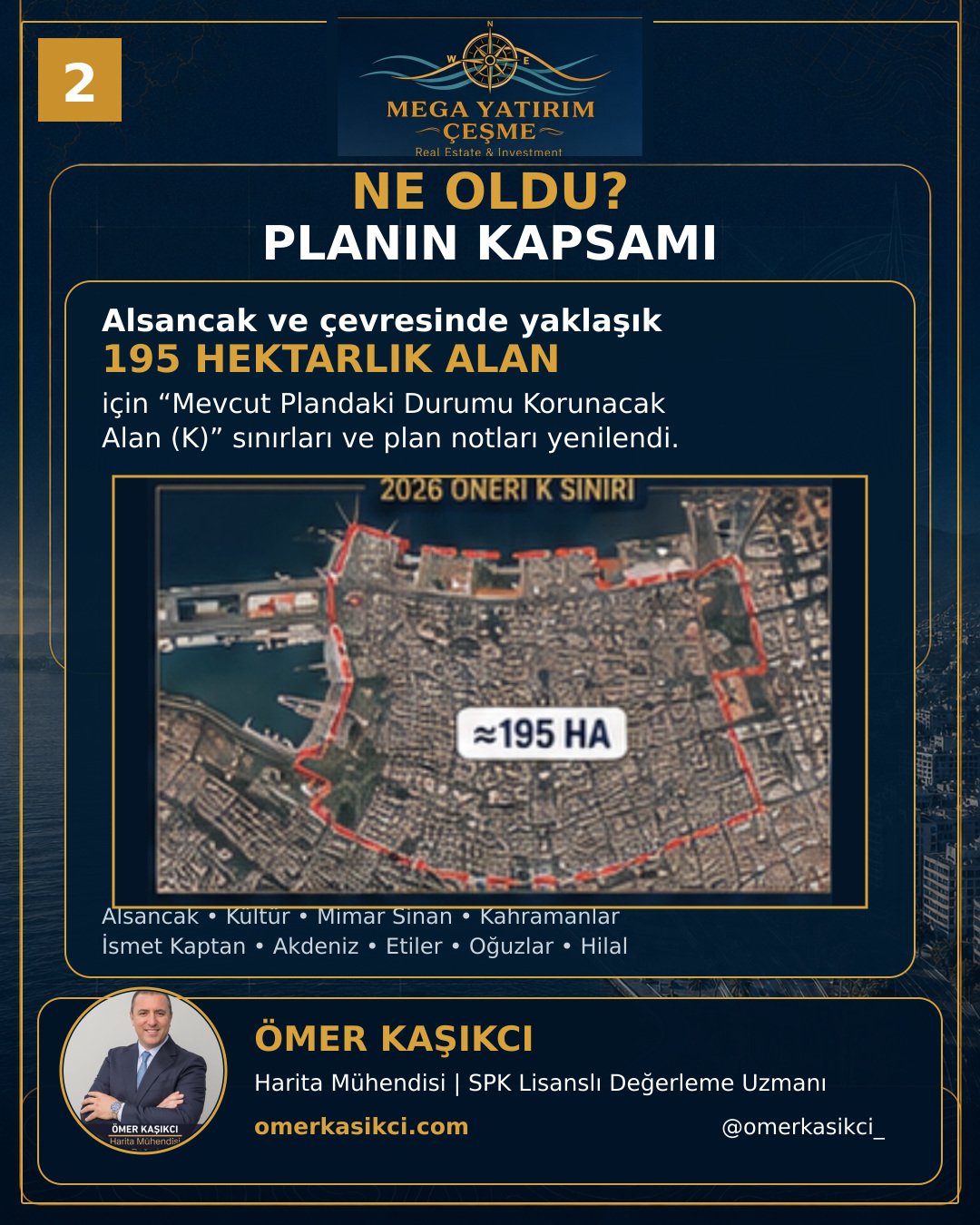
The regulation concerning an area of around 195 hectares in and around Alsancak should not be read merely as the renewal of old buildings. It requires a combined assessment of reducing earthquake risk, protecting existing licensed building rights, implementation options at parcel and block level, and urban infrastructure.
Who does the regulation concern?
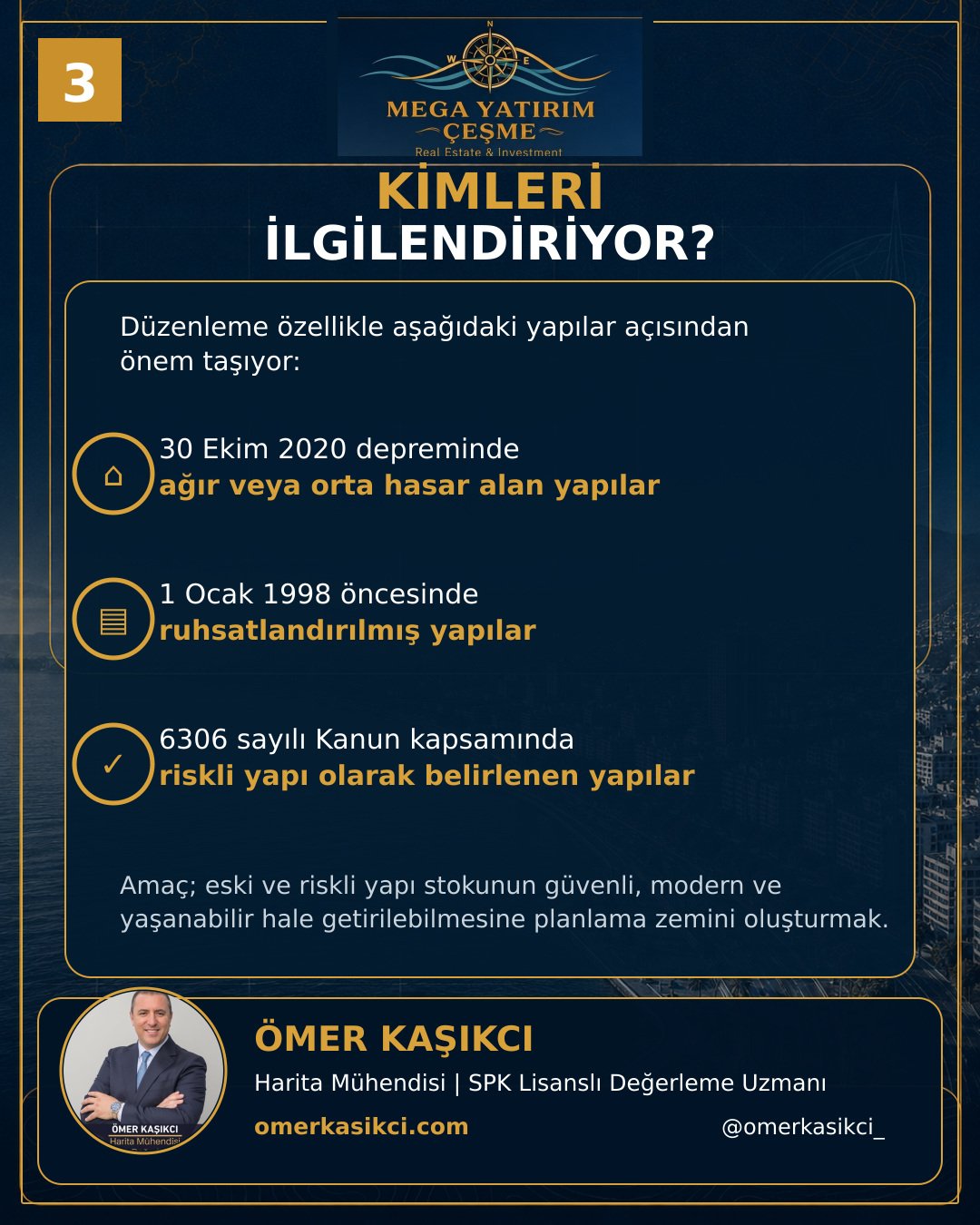
The work is particularly relevant for buildings that suffered heavy or moderate damage in the earthquake of 30 October 2020, buildings licensed before 1 January 1998, and properties designated as risky structures under Law No. 6306.
Why is protecting existing rights critical?
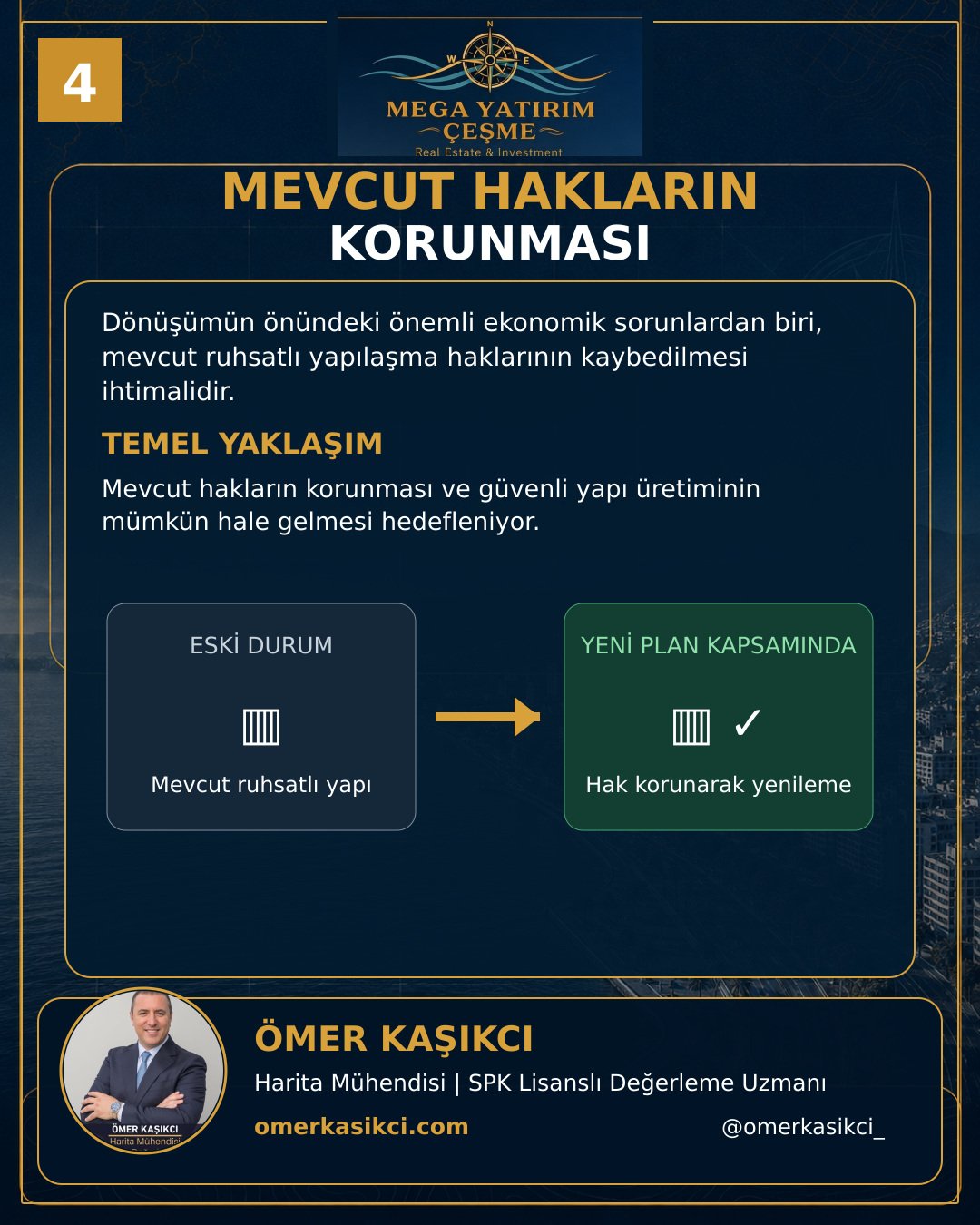
One of the main economic obstacles to regeneration is the possibility that existing licensed building rights may be lost during renewal. To encourage the production of safe buildings, plan decisions must be read together with ownership, licensing history and acquired rights.
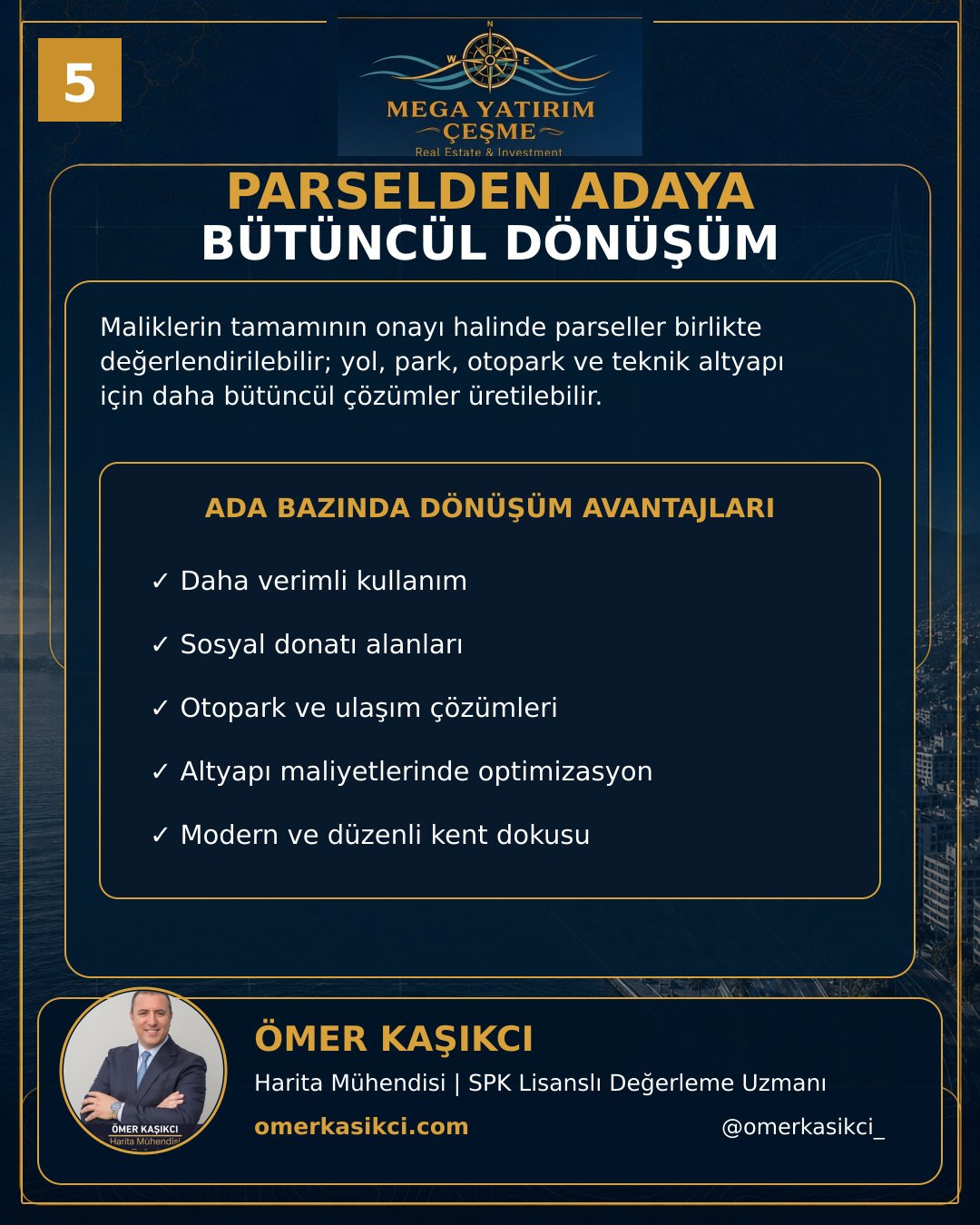
From parcel to block: integrated regeneration
Individual renewals at parcel level can increase building safety, but may not on their own solve problems of transport, parking, infrastructure, social facilities and public space. Where owner consensus and technical conditions are in place, block-based regeneration can create more efficient and orderly solutions.
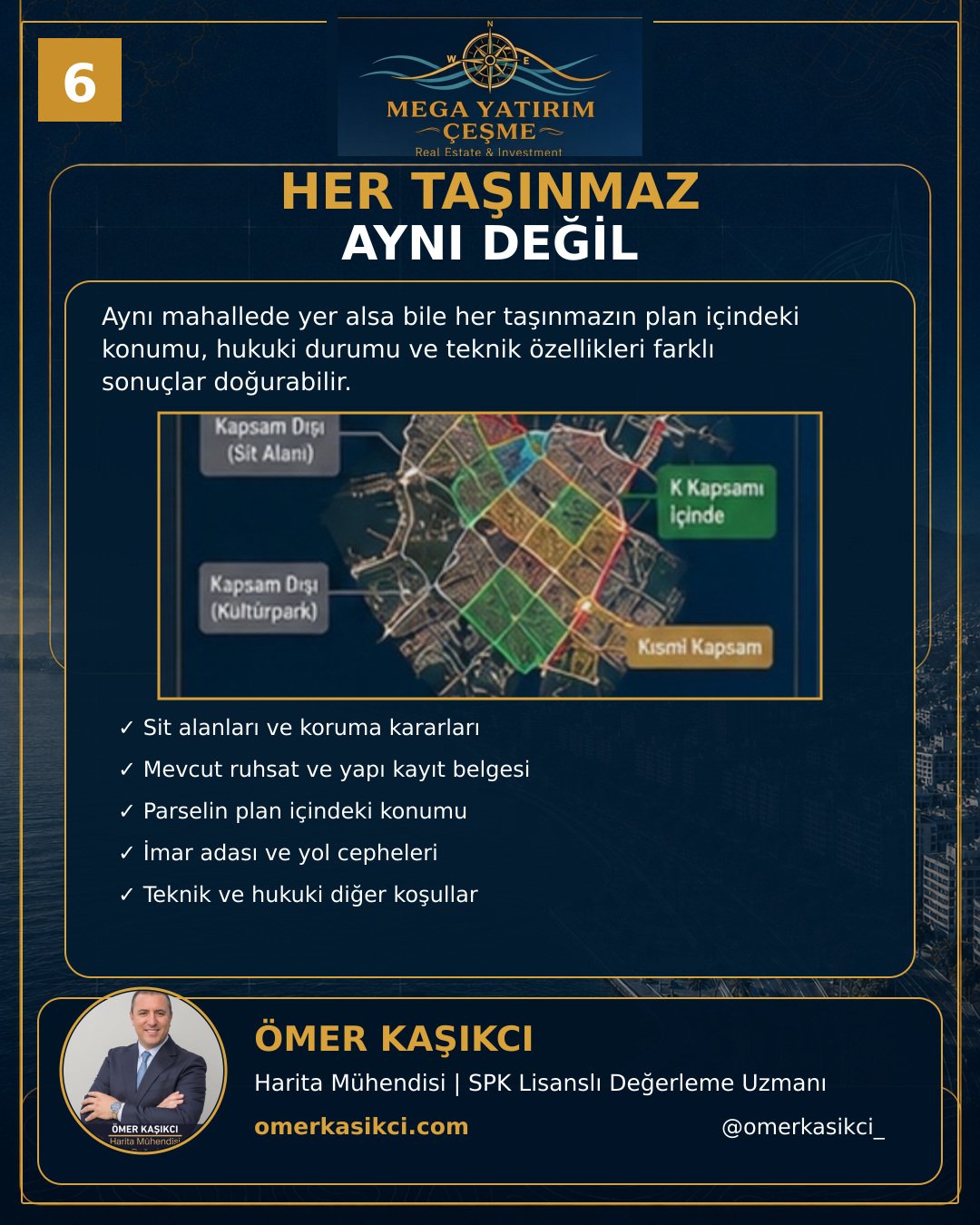
Not every property leads to the same result
Two properties in the same neighbourhood, even on the same street, may lead to different regeneration outcomes because of their position within the plan boundary, conservation decisions, licensing status, parcel geometry, road frontage, ownership structure and technical conditions.
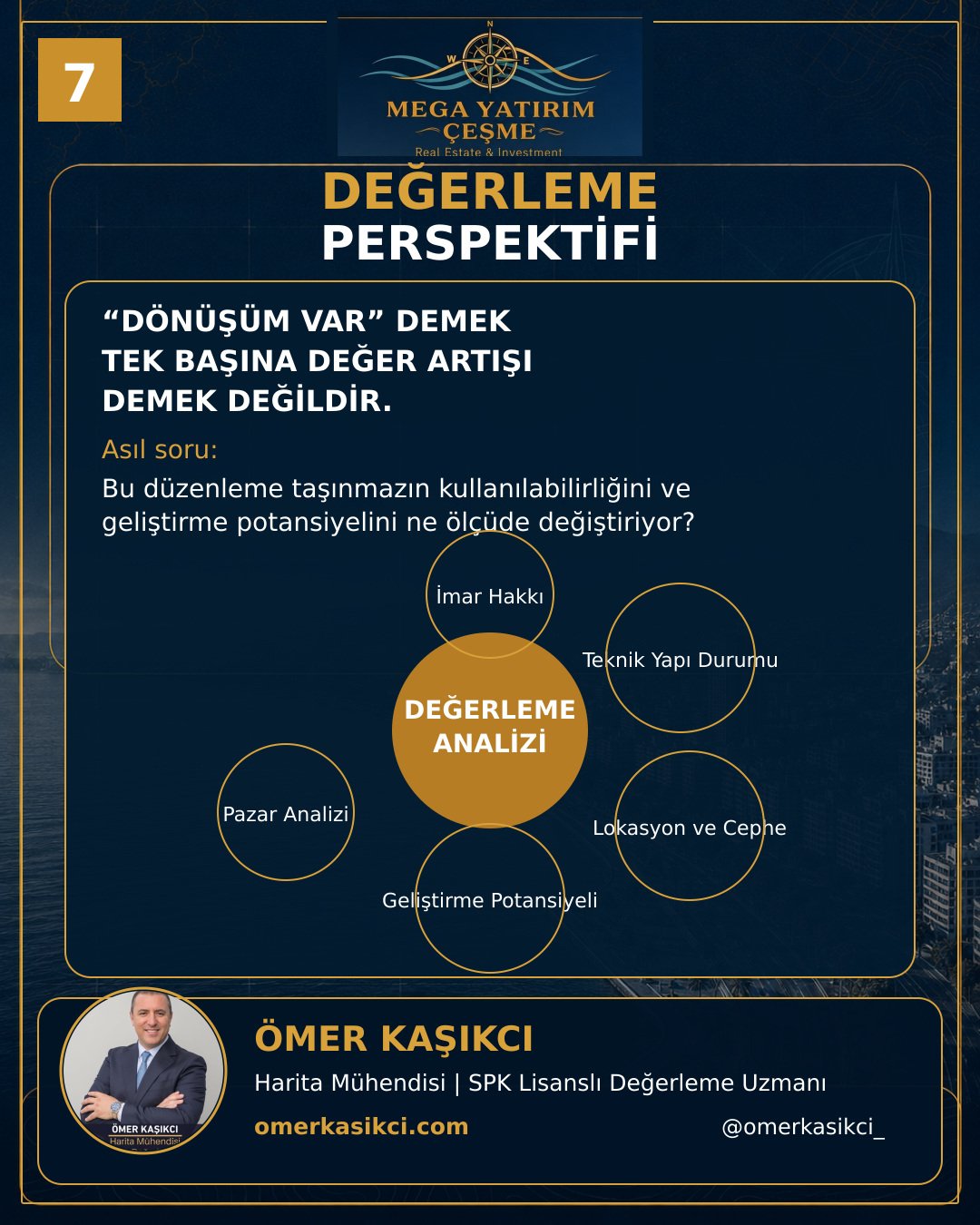
The right question from a valuation perspective
The question “is there regeneration in this area?” is not enough on its own. The real question is to what extent the regulation changes the zoning rights, usability, regeneration cost and development potential of the property under review.
- Zoning rights that are protected or changed
- Parcel size, geometry and road frontage
- Licensing and ownership status of the existing building
- Block-based implementation and owner consensus
- Amount of developable and saleable floor area
- Market conditions and regeneration cost
Technical carousel
Conclusion
In densely built areas with high economic value such as Alsancak, regeneration requires a careful balance between building safety, urban life, property rights and investment value. No definitive assessment of rights or value increase should be made without examining the plan provisions, land registry records, licensing history and technical characteristics for each property.
Information note: This article is a general technical assessment. The current plan, title deed, licence and legal status of each property must be examined separately.